Physical
development
Movement, coordination, fine motor skills and self-care.
AIABA FOR EARLY CHILDHOOD EDUCATION
Reusable eco-felt teaching materials and activity ideas based on Kyrgyzstan’s preschool education standard. For public and private kindergartens, learning centres and educators.
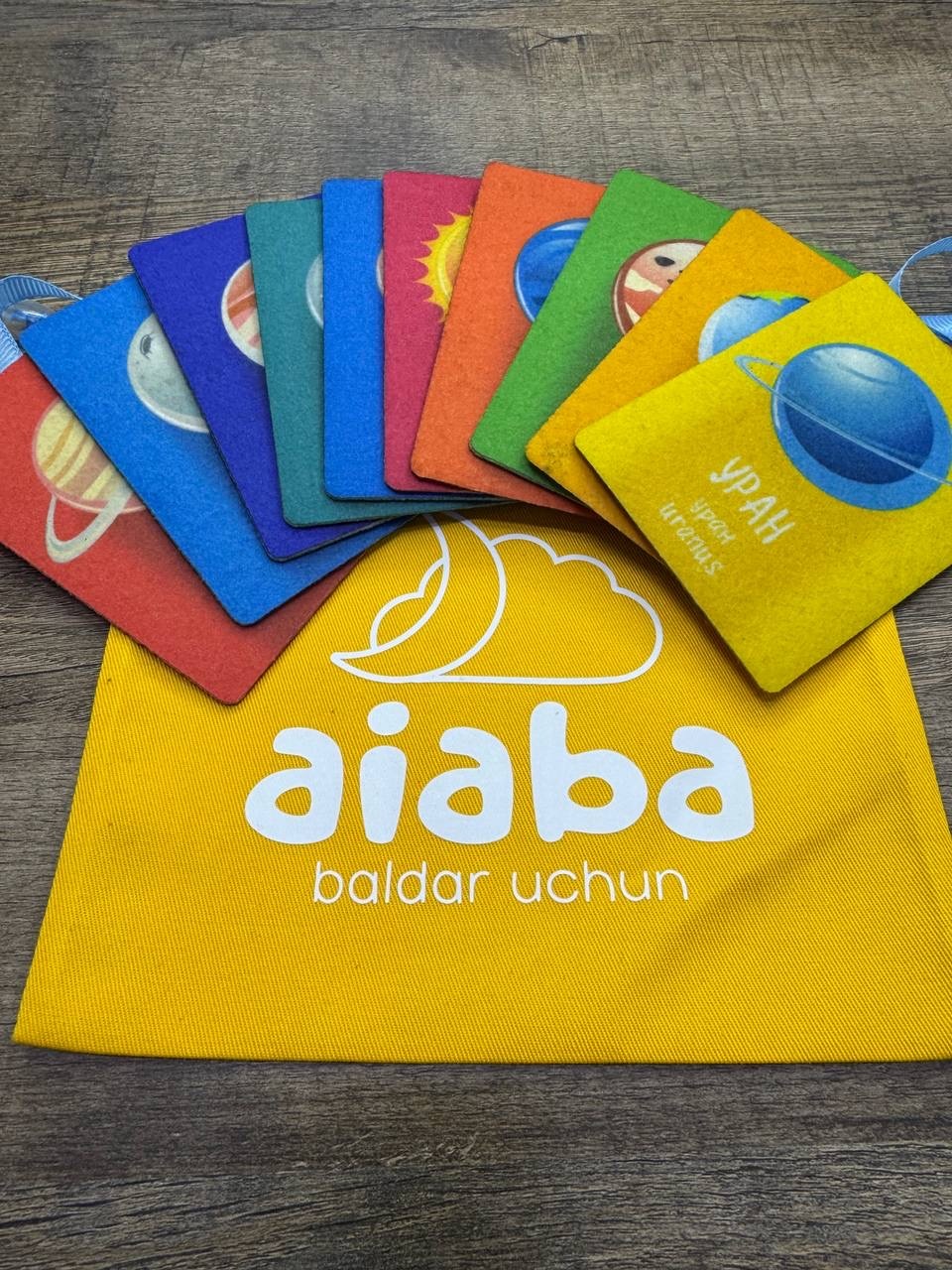 FROM A MATERIAL TO A SHARED DISCOVERY
OUR TEACHING APPROACH
AIABA materials and activities are developed
around the areas of the State Education Standard.
The Kyrgyz Republic's State Education Standard “Preschool Education and Childcare” was approved by Cabinet Resolution No. 257 of 15 May 2025. It identifies five development areas, play-based activities and partnership with families.
Movement, coordination, fine motor skills and self-care.
Feelings, empathy, kind communication and cooperation.
Observation, comparison, finding patterns and exploration.
Imagination, expression and individual ways of creating.
Speaking, listening, home language and sharing ideas.
Activities connect the five development areas, shared play and family partnership, drawing on sections 10, 12 and 18. Educators adapt them to their group and institution's programme.
CLASSROOM PRACTICE
Ideas for preschool groups.
Age and duration are guidelines for educators.
FEELINGS AND COOPERATION
Name feelings, listen to others and notice that everyone's mood can be different.
Emotion cards or drawings of faces, and a calm space for a circle.
Notice whether children recognise expressions, name or show feelings and let others finish speaking.
Invite families to name a feeling from the day without labelling it “good” or “bad”.
Use two contrasting cards with younger children. Invite older children to explore why one character might feel differently.
Development areas: Social-emotional development; emotional-personal and social-communication competencies.
COGNITION AND THINKING
Observe natural phenomena, compare and explain a choice.
Weather cards, a calendar sheet and pencils.
Notice whether children connect images with observations, spot changes and use comparison words.
Ask parents to check with their child whether the weather has changed by evening.
Children can respond by pointing. Older children can compare observations across several days.
Development areas: Cognitive development; literacy and communication.
LANGUAGE AND COMMUNICATION
Build vocabulary and a short connected account.
Alippe cards or pictures of familiar objects.
Notice whether children use new words, ask questions and link sentences.
Invite children to find an object at home beginning with a familiar sound and talk about it the next day.
Naming and pointing is enough for younger children. Older children can add words and continue the story.
Development areas: Literacy and communication; social-communication competency.
CREATIVITY AND IMAGINATION
Create a story together and welcome other people's ideas.
Three or four pictures of characters and places, and paper for a shared drawing.
Notice whether children offer ideas, listen to the previous storyteller and accept different possibilities.
Share the beginning with families and invite them to invent a different ending.
Children can join in pairs or act without words. Don't correct their imagination to fit a model.
Development areas: Creative and aesthetic development; literacy and communication.
MOVEMENT AND COORDINATION
Connect images, movement and coordination; explore what the body can do.
Animal cards and a clear, safe space.
Notice whether children choose a movement they can do, manage their space and notice others.
Suggest a family game of “Guess the animal”, without competition or difficult exercises.
Consider each child's physical abilities. Avoid compulsory jumping or judging speed.
Development areas: Physical development; creative and aesthetic development.
COMPARISON AND ATTENTION
Compare features, group objects and explain a choice.
A few pairs of matching pictures, or objects to compare if pairs are unavailable.
Notice whether children identify a feature, explain their choice and take turns.
Find pairs of socks, lids or other safe objects at home.
Vary the number of pictures. Don't set a time limit; children can find pairs together.
Development areas: Cognitive development; social-communication competency.
MOVEMENT AND MOTOR SKILLS
Develop coordinated hand movements and visual attention.
Large felt pieces and a sheet with a wide path.
Observe how children grasp a piece and guide their movement.
Draw a path on paper and follow it together with your fingers.
Choose age-appropriate piece sizes. Children can use whichever hand is comfortable.
Development areas: Physical and cognitive development.
HEALTHY ROUTINES
Notice everyday actions that help us care for ourselves.
Pictures of everyday actions or drawings by the educator.
Notice whether children can explain a familiar action.
Ask your child about a favourite morning ritual.
Use routines familiar to families. Don't compare children's living conditions.
Development areas: Physical and social-emotional development.
COMMUNICATION AND SUPPORT
Recognise a difficulty and express a request for help.
Emotion cards and a familiar play character.
Notice whether children use words or gestures to ask for help.
Practise saying “Please help me” at home.
Children may watch or respond with a gesture.
Development areas: Social-emotional development; literacy and communication.
COOPERATION
Negotiate, share materials and consider another person's idea.
Large felt pieces for a shared composition.
Notice whether children listen to their partner and suggest solutions.
Make a family picture by adding one piece at a time.
If needed, help children express a suggestion without judging the result.
Development areas: Social-emotional, creative and aesthetic development.
HOME LANGUAGE
Connect an image, a word and a familiar sound.
Alippe cards and objects in the classroom.
Notice whether children try saying the word and connect it with the object.
Invite families to name three familiar objects in their home language.
Support every family's language. Don't demand perfect pronunciation.
Development areas: Literacy and communication.
CONNECTED SPEECH
Sequence events and connect them through words.
Three or four story pictures or drawings.
Notice whether children use sequencing words and explain connections.
Recall three events from your day together.
Welcome different versions that make sense.
Development areas: Literacy, communication and cognitive development.
EARLY NUMBER SENSE
Match objects one to one and compare small groups.
Animal cards and large, safe counting objects.
Notice whether children recognise matches and differences in quantity.
Set the table with one napkin for each person.
Begin with two or three characters and add more when the group is ready.
Development areas: Cognitive development.
NATURE AND OBSERVATION
Notice changes in nature and connect them with everyday life.
Weather cards and pictures of seasonal changes.
Notice whether children explain choices using observations.
Observe the same tree near your home on different days.
Use the local climate and children's real experiences.
Development areas: Cognitive development; literacy and communication.
CULTURE AND CREATIVITY
Notice repetition and create an original composition.
Large coloured pieces and pictures of Kyrgyz patterns.
Notice whether children choose a shape, colour and way to repeat it.
Find a pattern on an object at home and explore it together.
Offer examples for inspiration, without requiring an exact copy.
Development areas: Creative, aesthetic and cognitive development.
SOUND AND IMAGINATION
Express an image through rhythm, movement and sound.
Weather cards and a table or soft surface.
Notice whether children try changing the rhythm and listening to others.
Listen to sounds outside together and copy one of them.
Avoid loud sounds. Children can participate through movement alone.
Development areas: Creative, aesthetic and physical development.
Consider each child's abilities. Allow responses through words, gestures or drawings. Sharing personal feelings is always optional.
FROM A SET TO A SESSION
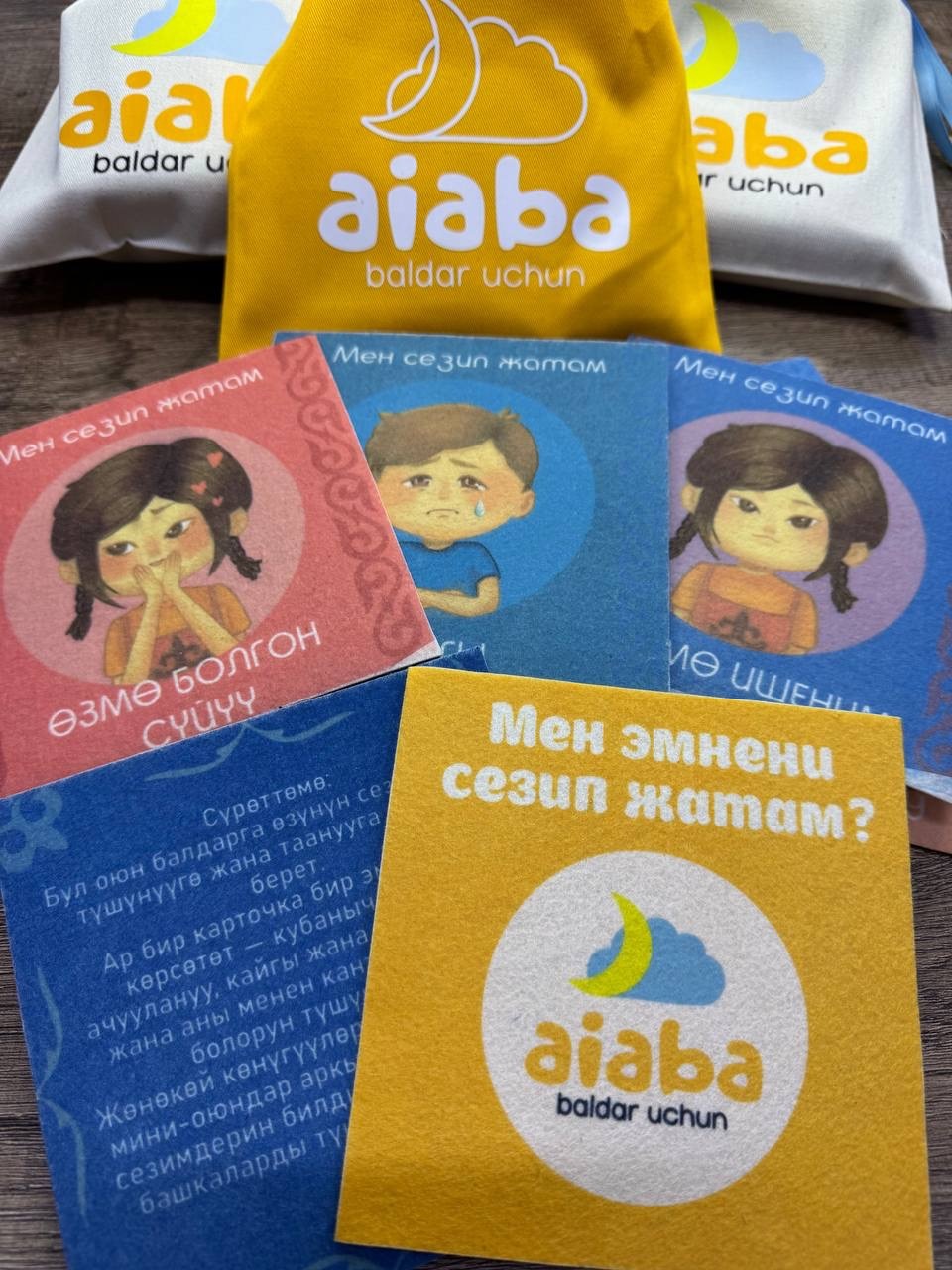
Morning circles, discussing situations, exploring feelings and working in pairs.
Observation calendars, weather comparisons, new words and small investigations.
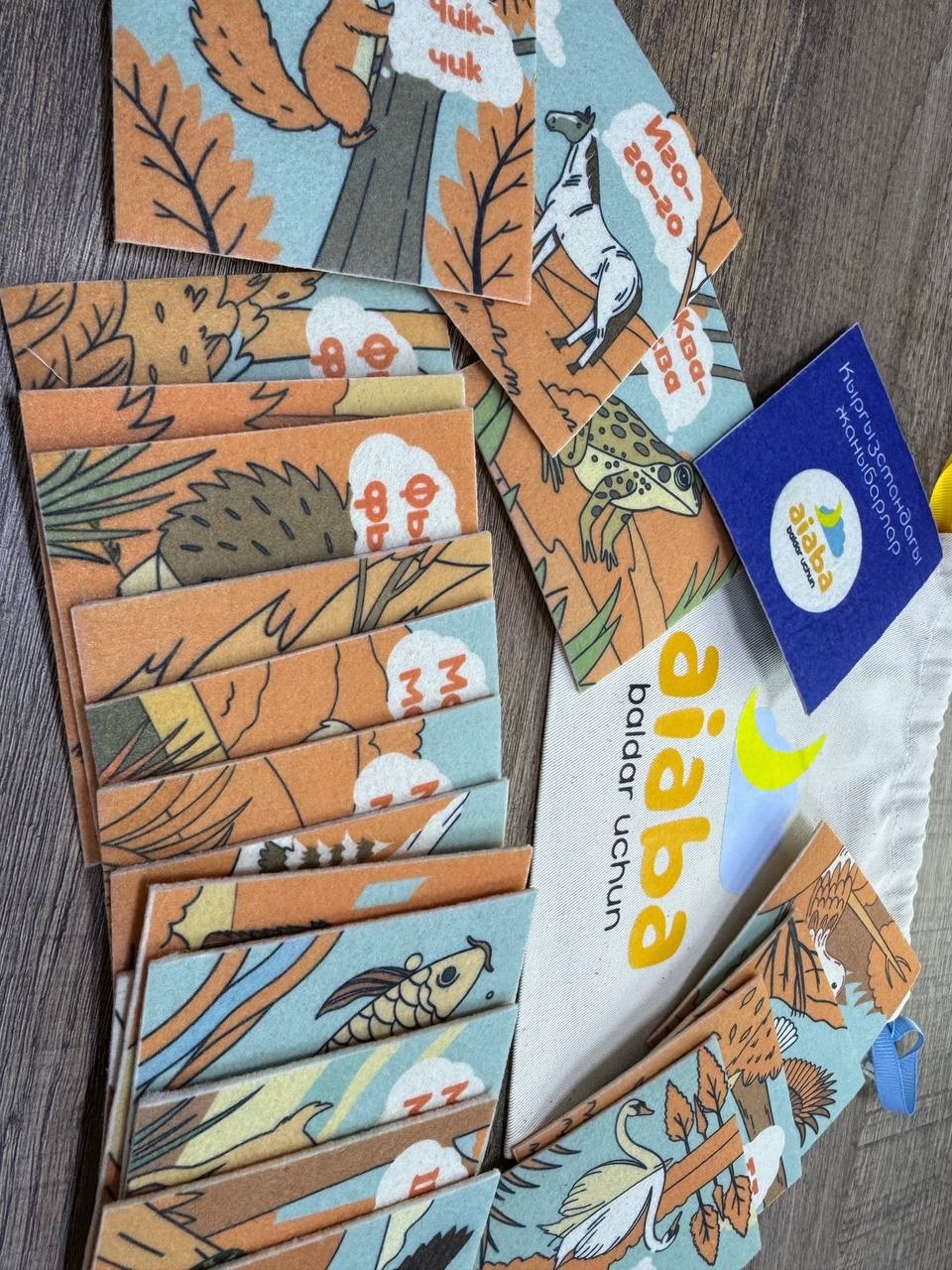
Describing pictures, sequencing, imaginative stories and playful tasks.
HOW TO USE THEM IN A GROUP
Name a feeling, compare objects or imagine what comes next. Consider your group's age and interests.
Invite them to choose, arrange, show and negotiate. Leave room for their ideas.
What did a child name, try or explain? Observe without competition or comparing children.
Share one simple question or game with parents to continue the topic at home.
MATERIALS FOR MANY DISCOVERIES
Our eco-felt materials are made for repeated use in children's groups. With proper care, one set supports many topics, activities and discoveries over several years.
No need to print and cut pictures for every session. Keep the familiar set and change the task or story.
Durable eco-felt is designed for regular play. Careful handling and storage help preserve its shape, colour and quality.
The materials are intended for children's activities. When choosing a set, we'll explain its eco-felt composition, age guidance and safe use, and share available documents and care instructions.
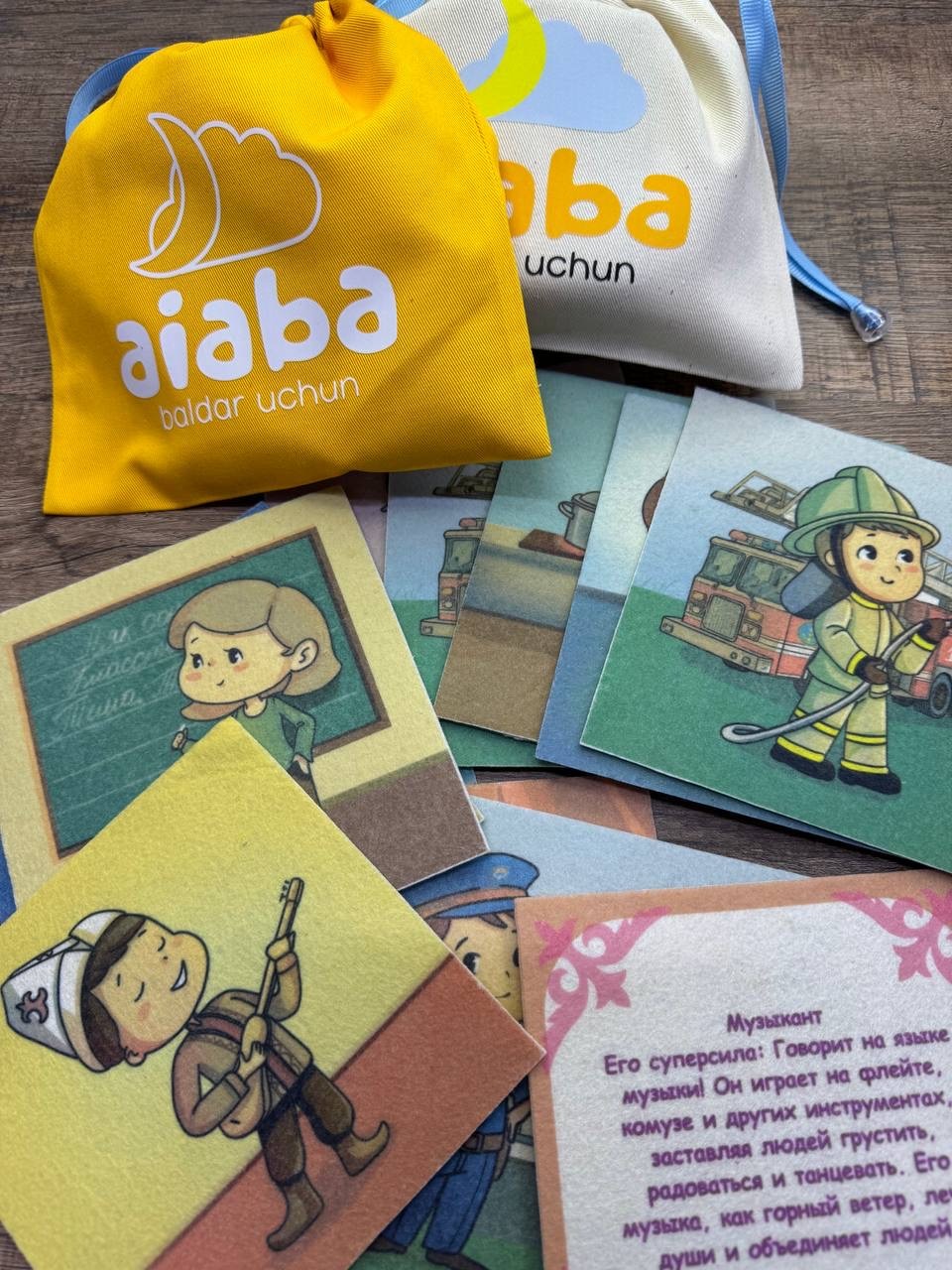 TRY IT TOGETHER
WORKSHOPS FOR EDUCATORS
We run workshops on using AIABA materials in kindergartens. Explore play techniques and practise them with your group's learning goals.
Format, duration, location and price are agreed with your institution.
PARTNER WITH AIABA
Tell us about the children's ages and your goals. We'll discuss the right set and supply arrangements.
AIABA offers a dedicated approach for public preschool institutions. Specific terms, contents and prices are agreed individually on request.
COMMON QUESTIONS
No. The State Standard sets the direction for preschool education. AIABA materials and activities are based on its areas. Educators select and adapt them to their programme and group.
Contents depend on the topic and goal. Visual materials, number of pieces, instructions and accompanying activities are agreed when ordering. Online examples are available on this page.
The discount depends on the set and partnership terms. Send an enquiry to discuss a specific offer. A fixed percentage has not been published.
Some themes, such as emotions, language and culture, can be discussed for primary-age children. Age adaptation is needed: the activities here are intended for preschool groups.
Yes. Open an activity and select “Print activity”. In the print dialogue, save it as a PDF or print a copy for your group.